
Table of Contents
How do chatbots work for high-ticket sales?
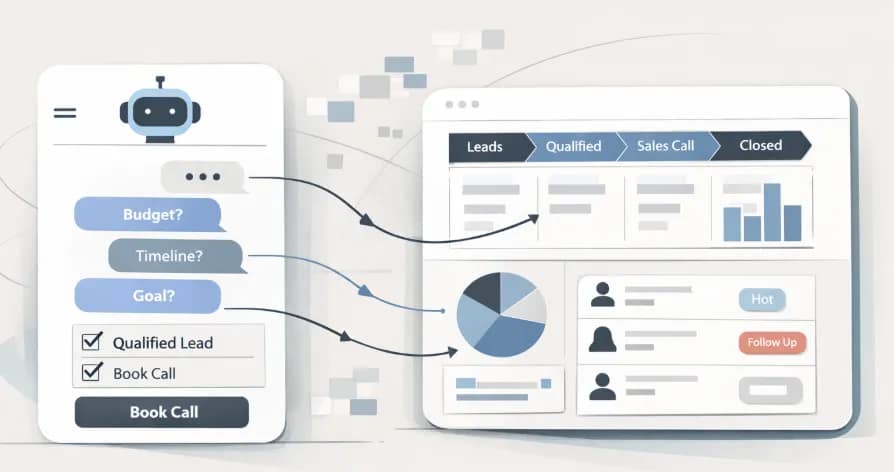
Chatbots work for high-ticket sales by qualifying intent before human contact. They ask structured questions, filter out low-fit prospects, and route only serious buyers into calls, CRMs, or follow-up sequences. In other words, they replace guesswork with logic—at scale.
I didn’t understand this at first.
I thought chatbots were about automation.
They’re not.
They’re about control.
Brand-Level Comparison: High-Ticket Chatbot Platforms (A vs B vs C)
Chatbot Tool Comparison for High-Ticket Sales Funnels
| Feature | ManyChat | Chatfuel | GoHighLevel |
|---|---|---|---|
| Core Strength | Conversational flows | Structured automation | All-in-one sales system |
| Best For | Creators & educators | Lead qualification | Agencies & high-ticket sales |
| Channel Focus | Instagram, Messenger | Messenger, Web | Web, SMS, email |
| Logic Depth | Medium | High | Very high |
| CRM Built-In | ❌ No | ❌ No | ✅ Yes |
| Calendar Protection | ⚠ Partial | ⚠ Partial | ✅ Strong |
| High-Ticket Readiness | ⚠ Conditional | ✅ Yes | ✅ Yes |
| Learning Curve | Low | Medium | Higher |
| Scalability | Medium | Medium–High | High |
Strategic insight:
ManyChat and Chatfuel excel at front-end conversations.
GoHighLevel shines when you need qualification + CRM + follow-up in one system.
Rule #1: A high-ticket chatbot is a gatekeeper, not a greeter
Most chatbots fail because they try to be friendly.
High-ticket chatbots must be selective.
Their job is to:
- Block low-intent leads
- Delay premature booking
- Protect your calendar
If everyone can book, no one is qualified.
This is why chatbot funnels outperform static forms in premium offers.
Related guide: Best Chatbot Software for High-Ticket Sales
https://highticketdeals.com/best-chatbot-software-for-high-ticket-sales/
Rule #2: How chatbots work behind the scenes (no fluff)
A chatbot works through conditional logic, not conversation alone.
Here’s the actual flow:
- Trigger (page visit, ad click, CTA)
- Question sequence (intent, timing, budget, problem)
- Decision path (logic tree)
- Outcome (book call, CRM entry, nurture, exit)
Every answer moves the user closer—or pushes them out.
That’s intentional.
Rule #3: Why chatbots outperform forms in high-ticket funnels
Forms collect answers.
Chatbots collect signals.
Signals like:
- Buying urgency
- Readiness to invest
- Objection patterns
- Decision confidence
Forms can’t adapt.
Chatbots can.
This is why many high-ticket funnels either replace forms entirely or use chatbots before forms.
Comparison Table: Best Use Case by Funnel Stage
| Funnel Stage | Recommended Platform Type | Why |
|---|---|---|
| Traffic → Conversation | ManyChat-style tools | Low-friction entry |
| Qualification → Routing | Chatfuel-style tools | Strong logic control |
| Sales → Follow-Up | GoHighLevel-style platforms | CRM + automation |
| Scale → Systems | Unified platforms | Fewer moving parts |
Rule #4: Chatbots and CRMs work best together (not separately)
A chatbot without a CRM is blind.
A CRM without a chatbot is slow.
Together, they:
- Tag leads by intent
- Segment automatically
- Trigger sales workflows
- Reduce manual follow-up
This is where high-ticket automation actually starts.
What Is the Best CRM for a Novice?
Best CRM for a Novice (Beginner-Friendly CRM Tools for 2026)
CRM Software for High-Ticket Sales
https://highticketdeals.com/crm-software/
Comparison Table: Standalone Chatbot Tools vs All-in-One Platforms
| Capability | Standalone Chatbot Tools | All-in-One Platforms |
|---|---|---|
| Conversation Control | High | High |
| CRM Integration | External | Native |
| Automation Depth | Medium | High |
| Setup Speed | Faster | Slower |
| Long-Term Scaling | Limited | Strong |
| Ideal User | Solo creators | High-ticket operators |
| Monetisation Potential | Medium | High |
Rule #5: The science—decision trees beat scripts
High-ticket chatbots rely on decision trees, not scripts.
Scripts assume.
Decision trees evaluate.
For example:
- Hesitates on price and asks implementation questions → warm lead
- Avoids commitment and wants “more info” → nurture, not sales
A chatbot makes these calls consistently—without emotion or fatigue.
That’s leverage.
Rule #6: The art of conversation still closes deals
Logic filters.
Conversation converts.
The best high-ticket chatbots:
- Ask fewer but sharper questions
- Use short, natural language
- Match how real sales conversations unfold
- Avoid survey-style interrogation
Overbuilding kills momentum.
Clarity keeps it moving.
Rule #7: Who should (and shouldn’t) use chatbots for high-ticket sales
Chatbots work best for:
- Coaches & consultants
- Agencies
- SaaS with demos
- High-ticket affiliate funnels
They’re less effective when:
- Offers are low-commitment
- Margins are thin
- Sales rely on impulse
High-ticket sales demand structure.
Chatbots are structured.
Pricing Comparison: High-Ticket Chatbot Platforms (No Numbers, No Hype)
| Pricing Dimension | ManyChat | Chatfuel | GoHighLevel |
|---|---|---|---|
| Entry Barrier | Low | Medium | Medium–High |
| Free Plan | Available (limited use) | Limited or trial-based | Trial-based |
| Pricing Model | Usage + features | Feature-based tiers | Flat platform-style |
| Cost Predictability | Can vary with scale | Moderate | High |
| Best for Early Stage | ✅ Yes | ⚠ Sometimes | ❌ No |
| Best for Scaling | ⚠ Limited | ⚠ Moderate | ✅ Yes |
| CRM Included | ❌ No | ❌ No | ✅ Yes |
| Automation Included | Partial | Partial | Full |
| Sales Team Ready | ❌ No | ⚠ Limited | ✅ Yes |
| Long-Term Value | Medium | Medium–High | High |
How to read this table (important for buyers)
Lower entry cost doesn’t mean better value.
For high-ticket funnels:
- ManyChat works well when you’re testing traffic or running conversation-first funnels
- Chatfuel suits structured qualification without needing a full CRM
- GoHighLevel makes sense when sales calls, follow-up, and attribution matter
As deal size increases, predictability beats cheap.
When higher pricing actually saves money
Here’s what experienced operators know:
- Paying less upfront often means paying more in tools later
- Fragmented stacks increase errors, delays, and missed follow-ups
- High-ticket funnels punish inefficiency fast
That’s why many entrepreneurs outgrow entry-level chatbot tools once deal values rise.
Strategic monetisation bridge (use verbatim)
If your funnel requires qualification, follow-up, and sales visibility, pricing should be evaluated as system cost, not software cost.
Which Chatbot Tool Fits Your Stage? (Quick Decision Guide)
(Use this to choose based on where your business is now—not where you hope it’ll be)
Choose Your Tool Based on Your Current Stage
| Your Business Stage | What You Actually Need | Best-Fit Tool Type | Why This Works |
|---|---|---|---|
| Just starting | Simple conversations, low friction | ManyChat | Fast setup, low commitment, easy testing |
| Getting leads but low quality | Better filtering and routing | Chatfuel | Strong logic control for qualification |
| Booking calls regularly | Calendar protection + follow-up | GoHighLevel | Native CRM and automation |
| Managing a sales team | Visibility, tagging, pipelines | All-in-one platform | One system, fewer leaks |
| Scaling high-ticket offers | Predictability and leverage | Unified chatbot + CRM stack | Reduces tool sprawl |
| Unsure / experimenting | Learn before committing | Entry-level chatbot | Avoids overbuilding |
Read this before you choose (most people skip this)
Your chatbot tool should match your operational maturity, not your ambition.
Common mistake:
- Early-stage founders buy enterprise platforms too soon
- Scaling founders cling to starter tools too long
Both cost money—just in different ways.
If your funnel relies on sales calls and follow-up, your chatbot must connect to a CRM—otherwise, qualification breaks at scale.
Strategic monetisation bridge.
Most entrepreneurs don’t choose the wrong tool.
They chose the right tool for the wrong stage.
That’s why the comparisons and reviews on highticketdeals.com are structured by use case, not hype.
Suggested supporting articles:
- Best Chatbot Software for High-Ticket Sales
- Chatbot vs Form for Lead Qualification
- Chatbots and CRM Automation Explained
Final takeaway
If you’re selling high-ticket offers without a chatbot, you’re either:
- Doing too much manual work
- Or leaking qualified leads
A chatbot doesn’t replace you.
It filters for you.
Explore the recommended chatbot and CRM tools on highticketdeals.com and build a funnel that respects your time—and your pricing.
What is a chatbot in high-ticket sales?
A chatbot in high-ticket sales is a qualification tool that filters leads based on intent, budget, and readiness before sending them to a sales call or CRM.
How do chatbots work for high-ticket sales?
Chatbots work for high-ticket sales by using logic-based questions to qualify prospects, route serious buyers, and reduce unqualified bookings.
Are chatbots better than forms for high-ticket offers?
Yes. Chatbots outperform forms by adapting questions in real time, improving completion rates, and capturing buying signals that are not available with static answers.
Do chatbots replace sales calls?
No. Chatbots protect sales calls by ensuring only qualified prospects reach human conversations.
Can chatbots integrate with CRMs?
Yes. Most high-ticket chatbots integrate with CRMs to tag leads, trigger workflows, and automate follow-up sequences.